
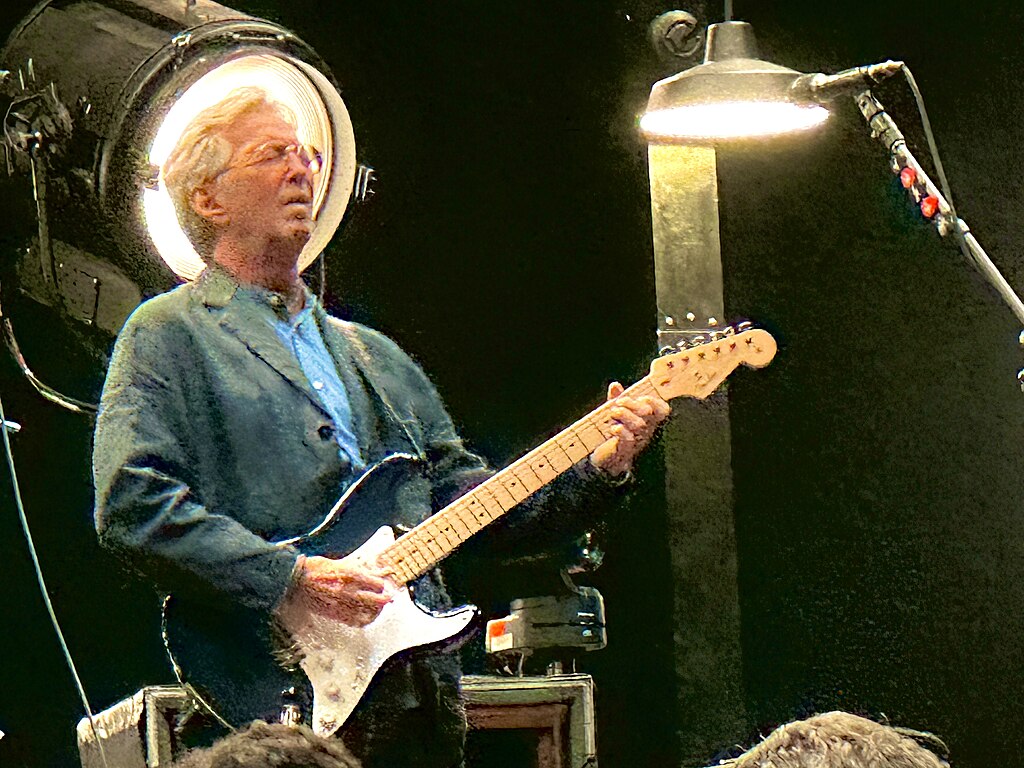
Eric Clapton is one of rock music’s most celebrated guitarists. With a career spanning more than six decades, his influence runs deep. From blues beginnings to global superstardom, Clapton has played with iconic bands, released chart-topping hits, and battled personal demons—yet always returned to his craft.
Nicknamed “Slowhand,” Clapton’s unique tone and emotion-filled solos have left an enduring mark on the music world. His story is a mix of raw talent, resilience, and legacy.
| Full Name | Eric Patrick Clapton |
|---|---|
| Stage Name | Eric Clapton (“Slowhand”) |
| Born | March 30, 1945 – Ripley, Surrey, England |
| Genres | Rock, Blues, Pop, Reggae |
| Instruments | Guitar, Vocals |
| Active Years | 1962 – present |
| Associated Acts | The Yardbirds, John Mayall & the Bluesbreakers, Cream, Blind Faith, Derek and the Dominos |
| Major Hits | “Layla”, “Tears in Heaven”, “Wonderful Tonight”, “I Shot the Sheriff”, “Change the World” |
| Rock Hall Inductions | Three times: Yardbirds (1992), Cream (1993), solo (2000) |
| Notable Awards | Multiple Grammy Awards, Commander of the British Empire (2004) |
Early Life and Musical Start
Born in Surrey in 1945, Eric Clapton was raised by his grandparents. He received his first guitar at age 13, but found it hard to play and set it aside. Two years later, he picked it up again—and never looked back.
Clapton was deeply influenced by blues legends like B.B. King and Robert Johnson. By 16, he was already playing in local gigs. At 17, he joined his first band and soon earned a reputation as a gifted guitarist.
Yardbirds and the Blues Breakers

In 1963, Clapton joined The Yardbirds. His powerful blues style helped shape the group’s early sound. When their hit “For Your Love” took a pop direction, Clapton left. He stayed loyal to his blues roots.
Next, he joined John Mayall & the Bluesbreakers. This move boosted Clapton’s status. His fiery guitar work on their 1966 album turned heads. The phrase “Clapton is God” began to appear as graffiti around London.
Cream and Global Stardom

Later that year, Clapton formed Cream with drummer Ginger Baker and bassist Jack Bruce. This “supergroup” combined rock, blues, and psychedelia.
Their second album, Disraeli Gears, launched them to international fame. Tracks like “Sunshine of Your Love” and “Strange Brew” showcased Clapton’s versatility. The band toured the U.S. and became huge stars.
But internal tensions ended Cream by 1968.
Blind Faith and New Collaborations

In 1969, Clapton formed another supergroup: Blind Faith. With Baker, Steve Winwood, and Ric Grech, the band released one album and toured the U.S. However, the pressure of fame led to its quick end.
During this period, Clapton also played with Delaney and Bonnie and performed with George Harrison, John Lennon, and others. He began singing more and refining his songwriting.
Derek and the Dominos: “Layla”

In 1970, Clapton created Derek and the Dominos. The group included Duane Allman, whose slide guitar helped define their sound. Their only studio album, Layla and Other Assorted Love Songs, featured “Layla”—a passionate track inspired by Clapton’s love for Pattie Boyd, Harrison’s wife.
Though not a big hit initially, “Layla” later gained legendary status. Rolling Stone ranked it among the greatest rock songs of all time.
But inner conflict and personal struggles led to the band’s breakup.
Addiction, Tragedy, and Recovery
Clapton fell into heroin addiction during the early 1970s. He withdrew from the spotlight for several years. The deaths of Hendrix and Allman, and his unrequited love for Boyd, deepened his troubles.
With help from friends, Clapton overcame heroin and later alcohol. He re-emerged with the 1974 album 461 Ocean Boulevard. It featured the hit “I Shot the Sheriff,” which brought reggae to mainstream radio.
The album topped charts in the U.S. and revived his career.
Slowhand Era and Continued Success
Clapton’s 1977 album Slowhand included hits like “Lay Down Sally,” “Cocaine,” and “Wonderful Tonight.” It became one of his best-selling records. He followed with Backless (1978), Another Ticket (1981), and Money and Cigarettes (1983).
Throughout the 1980s, Clapton stayed active, often collaborating with Phil Collins. Albums like Behind the Sun and August kept his sound fresh.
“Tears in Heaven” and Grammy Wins
In 1991, tragedy struck again. Clapton’s 4-year-old son, Conor, died after falling from a window. In response, Clapton wrote “Tears in Heaven.” The song’s raw emotion resonated globally.
It peaked at #2 in the U.S. and #5 in the U.K., and topped charts in several countries. Clapton’s Unplugged performance in 1992, which featured the song, became one of the best-selling live albums ever.
“Tears in Heaven” earned multiple Grammy Awards, including Song and Record of the Year.
Later Years and Honors

Clapton didn’t slow down. He continued recording, performing, and winning awards. In 1997, “Change the World” won another Grammy for Song of the Year. In 1999, “My Father’s Eyes” earned Best Male Pop Vocal Performance.
In 2002, he helped organize The Concert for George, a tribute to his late friend George Harrison. He performed alongside McCartney, Ringo Starr, and others.
In 2009, Clapton toured with Steve Winwood, revisiting their Blind Faith roots.
A Triple Hall of Fame Inductee

Eric Clapton holds a unique honor. He is the only person inducted into the Rock and Roll Hall of Fame three times:
-
With The Yardbirds (1992)
-
With Cream (1993)
-
As a solo artist (2000)
In 2004, he was named a Commander of the British Empire (CBE) by Queen Elizabeth II. Rolling Stone ranked him No. 2 on its list of the “100 Greatest Guitarists of All Time.”
Still Making Music
In 2013, Clapton released Old Sock, an album of favorites and new material. Guests included Steve Winwood and Paul McCartney.
Even with decades behind him, Clapton has kept playing, recording, and performing. His recent tours and occasional releases continue to draw fans from all generations.
Conclusion
Eric Clapton’s life has had extreme highs and heartbreaking lows. Yet his musical legacy is undeniable. From “Layla” to “Tears in Heaven,” he has touched millions with his guitar and voice.
Clapton remains a towering figure in music history—respected for his artistry, perseverance, and influence.
“Slowhand” may have mellowed over the years, but his guitar still speaks with fire and soul.