
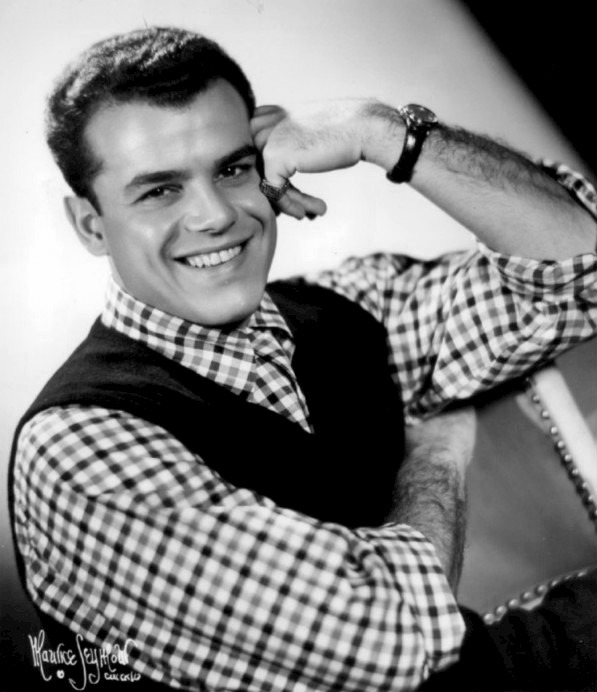
Julius LaRosa was a beloved American traditional pop singer and media personality. Best known for his smooth voice and charming presence, LaRosa rose to stardom in the 1950s and remained active in entertainment for decades. From national chart-topping hits to a controversial moment on live television, his career had memorable highs and dramatic turns.
Let’s take a closer look at his journey.
Early Life and Roots
Julius LaRosa was born on January 2, 1930, in Brooklyn, New York. He was of Italian descent and grew up surrounded by music and culture. After finishing high school, he worked briefly in radio before joining the United States Navy.
It was during his naval service in Pensacola, Florida, that his life would change forever. Television host Arthur Godfrey, a Naval reserve officer, happened to hear LaRosa sing. Impressed by the young man’s voice, Godfrey told him to look him up after his Navy service ended.
Breakthrough With Arthur Godfrey

Shortly after his discharge in 1951, LaRosa joined Arthur Godfrey and His Friends, a popular TV and radio variety show. His first appearance was in November 1951. The audience quickly fell in love with his heartfelt singing and friendly personality.
Godfrey’s shows became a huge platform for LaRosa. He soon appeared on both the morning and evening versions of the program. Viewers tuned in regularly to hear his renditions of popular ballads and traditional standards.
In 1952, while still performing under Godfrey’s wing, LaRosa signed with Cadence Records. The label was newly formed by Archie Bleyer, Godfrey’s bandleader. LaRosa’s debut single, “Anywhere I Wander,” was also Cadence’s first release—and it hit big.
Hit Songs and Stardom

“Anywhere I Wander” soared to #4 on the Billboard chart in 1953. But that was just the beginning. That same year, LaRosa released “Eh, Cumpari,” a bilingual hit sung in English and Sicilian Italian. It peaked at #2 and became one of his signature songs.
“Eh, Cumpari” was playful, rhythmic, and catchy. It helped him win the award for Best New Male Vocalist of the year.
Other hit singles followed, including:
-
“Domani (Tomorrow)” – Reached #13
-
“Suddenly There’s A Valley” – Peaked at #20
-
“Lipstick & Candy & Rubbersole Shoes” – Hit #15
Later, while signed with RCA Records, he had more modest hits such as “Torero” (#21), “Get Me to the Church on Time,” and “Mama Guitar.” His final charting single came in 1966 with “You’re Gonna Hear From Me” under the MGM label.
A Public Fallout with Arthur Godfrey
Despite LaRosa’s success on Arthur Godfrey and His Friends, tensions simmered behind the scenes. Godfrey reportedly didn’t allow LaRosa to hire his own manager or agent. Control over LaRosa’s career became a point of contention.
Things came to a head in October 1953. While performing the song “Manhattan,” LaRosa unknowingly gave his “swan song” performance. Godfrey dismissed him live on-air shortly after, catching both LaRosa and the audience by surprise. The firing caused a media frenzy and painted Godfrey in a negative light.
Still, LaRosa’s fans stuck by him, and his career didn’t slow down.
New Television Appearances and a Solo Career
Soon after the Godfrey fallout, LaRosa was invited by Ed Sullivan to perform on Toast of the Town, which would soon become The Ed Sullivan Show. This gave him renewed visibility and helped solidify his place in the entertainment world.
He also hosted his own television musical variety series. In addition to singing, LaRosa began performing at nightclubs, particularly in the Las Vegas circuit.
As time passed, he became a fixture in the American music scene, performing classic songs from what would later be called the Great American Songbook.
Disc Jockey and Later Years
In the late 1960s, LaRosa found a new calling—as a radio disc jockey. He worked for WNEW (now WBBR) in New York for eight years. Listeners appreciated his taste in music and his smooth, warm voice on the air.
Unfortunately, after a change in management at the station, his contract was not renewed. He didn’t stop working, though. In the late 1990s, LaRosa returned to radio at WSNW in New Jersey.
Throughout these years, he never stopped singing. He performed in clubs, on television specials, and at special events. He maintained a loyal fan base who admired his dedication to music.
Musical Style and Legacy
Julius LaRosa was known for his clear baritone and traditional pop style. He sang songs with sincerity and emotional depth. Unlike many other artists of his era, LaRosa didn’t shift into rock or R&B. He stayed true to the romantic, orchestral sound of American standards.
His music often blended American and Italian influences, making him stand out in a crowded field of 1950s male vocalists.
His story also resonates as one of resilience. Though his on-air dismissal could have ended his career, it became a springboard for even greater independence.
Personal Life and Death
Julius LaRosa led a relatively private life outside of his career. He focused on his craft, stayed away from major scandals, and continued to engage with his fans through performance and radio.
He passed away in 2016 at the age of 86. Though gone, his music still brings joy to many.
Final Thoughts
Julius LaRosa may not be a household name today, but in the 1950s, he was one of America’s most beloved voices. From his discovery in the Navy to singing on major television shows, LaRosa’s story is one of talent, opportunity, and staying power.
His hit songs, especially “Eh, Cumpari” and “Anywhere I Wander,” live on as nostalgic favorites. More than just a singer, he was a storyteller, performer, and radio personality who left a lasting mark on American pop music.