
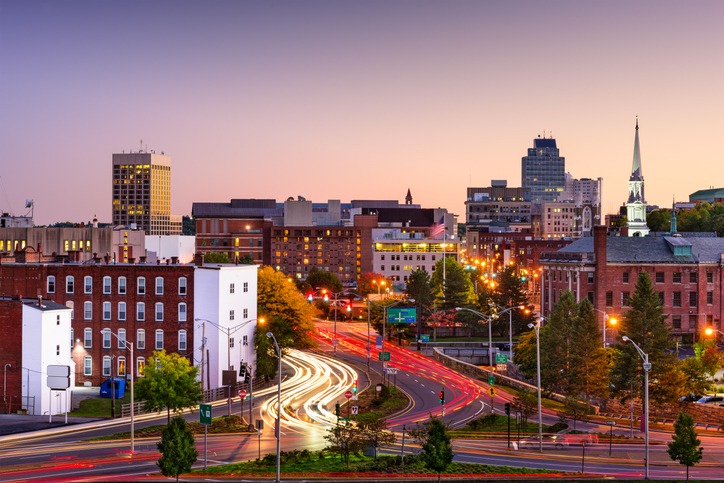
Massachusetts may be small, but it has a big story. From the landing of the Pilgrims to the birthplace of basketball, this New England state has left a deep mark on U.S. history, education, sports, and science.
Here are some fascinating facts about the Bay State you might not know—but will enjoy learning.
Lowell and the Birth of American Industry

Lowell, Massachusetts, played a crucial role in launching the Industrial Revolution in the United States. In the early 1800s, it became a center for textile manufacturing thanks to its location along the Merrimack River. Engineers used canals and water-powered mills to run massive cotton factories. By the 1850s, Lowell had the largest industrial complex in the country.
Immigrants and young women known as “mill girls” filled the city’s workforce. Today, the Lowell National Historical Park tells the story of how this city helped build modern industry in America.
Harvard and MIT: Two Academic Giants

Massachusetts is home to some of the most prestigious universities in the world. Harvard University, founded in 1636 in Cambridge, is the oldest college in the United States. It has produced presidents, Supreme Court justices, and Nobel Prize winners.
Just down the road, the Massachusetts Institute of Technology (MIT) was founded in 1861 and is a global leader in science, technology, and innovation. MIT has shaped fields from computing to engineering and continues to influence breakthroughs in modern research and development.
The Invention of Basketball in Springfield

Basketball, one of the world’s most popular sports, was born in Springfield, Massachusetts, in 1891. Dr. James Naismith, a Canadian physical education instructor, created the game while working at the YMCA Training School (now Springfield College). Looking for a way to keep his students active indoors during winter, Naismith came up with a game that used a soccer ball and two peach baskets. The sport quickly spread and evolved, and today, the Naismith Memorial Basketball Hall of Fame in Springfield honors its legacy.
Boston: A City of Revolutionary Firsts

Boston is packed with American “firsts.” It was home to the country’s first public park (Boston Common, 1634), first public school (Boston Latin School, 1635), and the first subway system (1897). The city was also a center of revolutionary activity. Events like the Boston Massacre, the Boston Tea Party, and Paul Revere’s midnight ride all happened here. Boston’s Freedom Trail links many of these sites, making it one of the best cities in the U.S. for exploring colonial history.
Massachusetts and the Codfish Legacy
Fishing has always been vital to the state’s economy, especially cod. Early settlers relied on the abundant cod found off the coast. By the 1700s, dried cod became a major export. The fish was so essential that a carved wooden cod, known as the “Sacred Cod,” hangs in the Massachusetts House of Representatives chamber. This earned the state one of its earliest nicknames—“The Codfish State.”
A Museum of Global Treasures
The Museum of Fine Arts in Boston is one of the largest and most impressive museums in the United States. Founded in 1870, it features more than 450,000 objects, from ancient Egyptian sarcophagi to modern masterpieces. The museum includes works by Monet, Van Gogh, Renoir, and Degas, as well as important collections of Asian and American art. Over a million people visit each year to explore its wide-ranging exhibits.
The Iconic Massachusetts State House

Sitting atop Beacon Hill in Boston, the Massachusetts State House is one of the country’s finest examples of Federal architecture. Completed in 1798, it was designed by architect Charles Bulfinch and features a gleaming golden dome visible from much of the city. Inside, the building houses the state’s legislative chambers and historic artifacts. Its beauty and historical significance make it a key symbol of Massachusetts politics and culture.
The Fragrant State Flower: Mayflower
The mayflower (Epigaea repens), a low-growing, fragrant plant with pink or white blooms, has been Massachusetts’ state flower since 1918. It grows in forests and on hillsides and was cherished by early settlers. Due to its popularity and fragility, it’s protected by law. Digging it up in the wild could result in a fine, highlighting how deeply Massachusetts values its native flora.
Edgartown Harbor Light and Martha’s Vineyard

Martha’s Vineyard, a picturesque island off the southern coast, is known for its beaches, small towns, and historic lighthouses. Edgartown Harbor Light was the first lighthouse built on the island in 1828. After the original was damaged in the Great Hurricane of 1938, a replacement from Crane Beach in Ipswich was relocated to the site. Restored in 1988 and now managed by the Town of Edgartown, the lighthouse remains a charming symbol of coastal life in Massachusetts.
The Meaning Behind the Massachusetts Flag

The Massachusetts state flag features a white background with the state coat of arms in the center. The blue shield depicts a Native American holding a bow and arrow pointed downward, symbolizing peace. A white star next to the figure represents Massachusetts as one of the original thirteen colonies.
The motto, in Latin, reads: “Ense petit placidam, sub libertate quietem,” meaning, “By the sword we seek peace, but peace only under liberty.” Above the shield is a disembodied arm holding a sword—a reminder of the struggle for freedom.
Alexander Graham Bell’s Groundbreaking Work

In the early 1870s, Alexander Graham Bell moved to Boston and worked as a professor of vocal physiology at Boston University. While exploring how to transmit sound electronically, he developed one of the first practical telephones. In 1876, Bell successfully demonstrated the invention, forever changing global communication. His work in Massachusetts set the stage for the telecommunications revolution.
Hebert’s and the Introduction of White Chocolate
Hebert Candies, located in Shrewsbury, Massachusetts, introduced white chocolate to the American market in the early 1950s. It became a novelty at the time and helped establish the company as a chocolate pioneer. To this day, Hebert’s remains a popular stop for those with a sweet tooth and an interest in culinary innovation.
Clark University and Scientific Breakthroughs
Worcester’s Clark University has contributed to more than just education. In the mid-20th century, researchers at the university helped develop the first birth control pill. It was a groundbreaking achievement in science and medicine, supported by activists and scientists like Margaret Sanger and Gregory Pincus. Clark is also known for early work in psychology and space science—making it a surprising hotspot for major scientific milestones.
Boston’s Beloved Marathon
The Boston Marathon is the world’s oldest annual marathon. First held in 1897, it takes place every Patriots’ Day in April. The race covers 26.2 miles and is famous for both its difficult “Heartbreak Hill” and the overwhelming support from local spectators. It’s a cherished tradition and a bucket-list event for runners worldwide.
Cape Cod’s Natural and Cultural Riches

Cape Cod is a sandy peninsula that curves out into the Atlantic Ocean. It’s a summer haven for tourists, known for its beaches, lighthouses, seafood shacks, and whale watching. The Cape Cod National Seashore preserves 40 miles of untouched coastline, offering trails, dunes, and stunning ocean views. Towns like Provincetown, Chatham, and Hyannis add charm and culture to the area’s natural beauty.
Salem and the Witch Trials

Salem is famous—and infamous—for its 1692 witch trials. Over 200 people were accused of witchcraft, and 20 were executed. The hysteria was fueled by superstition and social tension. Today, Salem draws visitors from all over with its museums, haunted history tours, and October festivities. It serves as both a tourist attraction and a somber reminder of the dangers of fear and injustice.
Unique State Symbols
Massachusetts has some of the most memorable state symbols. The Boston Terrier, a friendly and compact dog breed, became the official state dog in 1979. The black-capped chickadee, known for its cheerful song, has been the official state bird since 1941. The American elm, once a common tree across New England, is the official state tree. Even the Boston cream pie—a cake with custard filling and chocolate topping—is the state dessert.
Fenway Park: A Baseball Landmark
Opened in 1912, Fenway Park in Boston is the oldest Major League Baseball stadium still in use. It’s home to the Boston Red Sox and features the iconic “Green Monster” wall in left field. Fenway has hosted countless legendary games and players, from Babe Ruth to David Ortiz. It remains a pilgrimage site for baseball fans across the globe.
The Historic Freedom Trail

The Freedom Trail is a 2.5-mile red-brick path that winds through downtown Boston, linking 16 historically significant sites. Stops include the Paul Revere House, Faneuil Hall, and the Old North Church. The trail offers a walkable lesson in Revolutionary history, making it one of the most educational and popular attractions in the state.
Massachusetts is a place where the past meets the present. It shaped the country through its revolutionary roots, advanced its future through education and science, and continues to be a cultural and historical powerhouse. Whether you’re interested in politics, art, sports, or science—Massachusetts has something fascinating to share.