
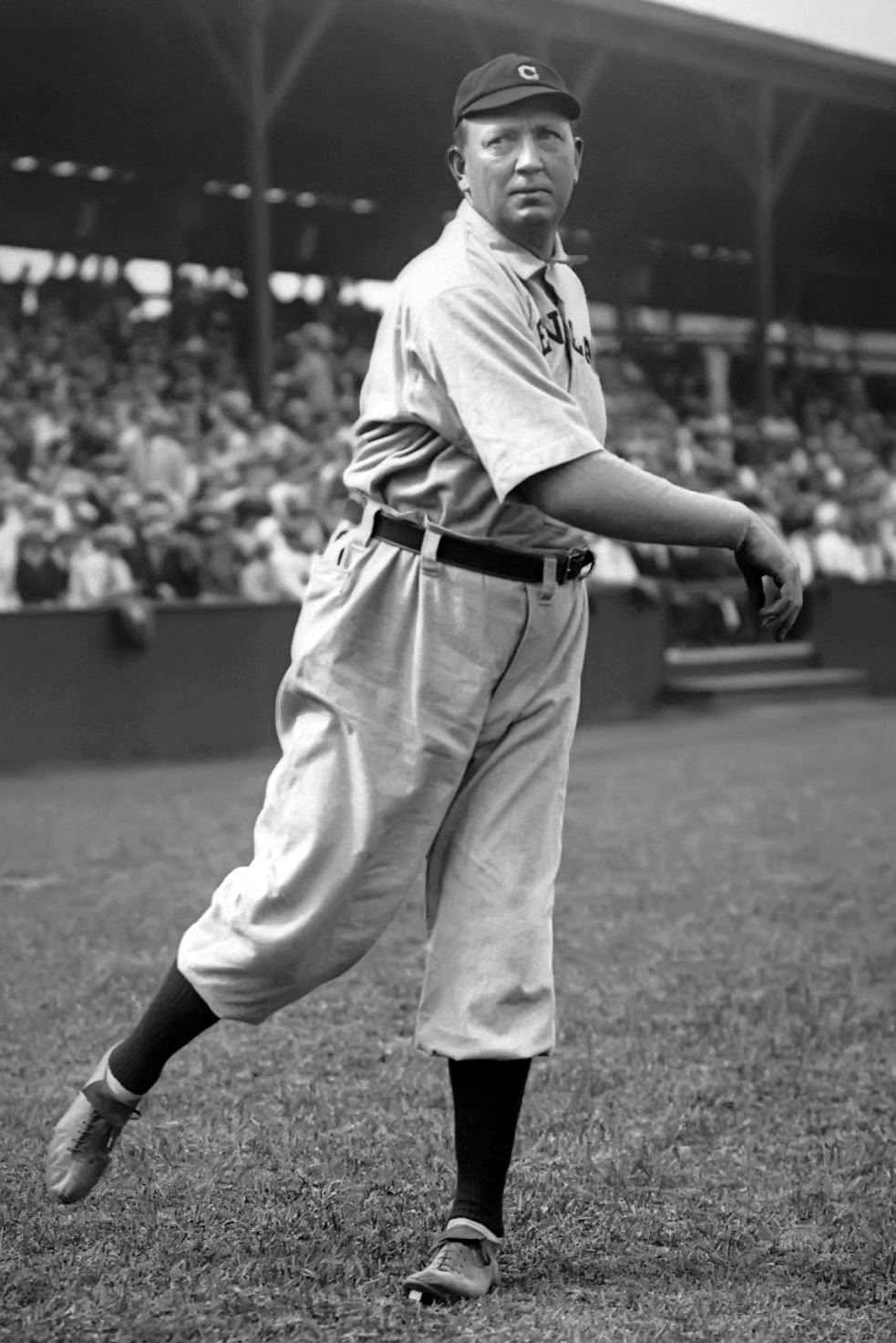
No pitcher in baseball history has matched the incredible endurance, dominance, and consistency of Denton True “Cy” Young. He didn’t just set records—he created ones that may never be broken. With 511 career wins, 749 complete games, and over 7,000 innings pitched, Cy Young became the benchmark by which all other pitchers are measured. From the farms of Ohio to the Hall of Fame, his journey is one of grit, strength, and unmatched determination.
Humble Beginnings
Born on March 29, 1867, in Gilmore, Ohio, Denton Young was the oldest child in a farming family. His father, a former Union soldier from the Civil War, raised Denton with hard work and discipline. Alongside his brothers, Denton discovered a love for baseball. The boys would travel up to 20 miles—on foot or horseback—just to play a single game.
Even at a young age, Denton’s size and powerful arm made him a standout. He quickly earned the pitcher’s spot in most games. After a stint working as a farmhand in Nebraska, he returned to Ohio in 1887 and resumed playing semi-pro ball for a team in New Athens. He split time as a pitcher and a second baseman, but his talent on the mound made him shine.
From “Cyclone” to “Cy”

In 1890, Young signed with a minor league team in Canton, Ohio. It was there that he earned the nickname “Cyclone.” He had thrown a fastball so hard it tore through a wooden fence, leaving it splintered. Teammates said it looked like a cyclone hit it. The name stuck, but it was soon shortened to “Cy.”
Despite playing on a poor team, Cy became the best pitcher in the Tri-State League. He threw his first no-hitter in July 1890, striking out 18 batters. His talent didn’t go unnoticed. That same year, Cleveland paid $300 to acquire him and increased his monthly pay from $60 to $75—a big leap for the time.
Climbing the Ranks

Cy ended his first major league season with a 9-7 record—impressive for a rookie. The following season, in 1891, he went 27-20. In 1892, he emerged as the top pitcher in the National League. When the league split the season into two halves in 1893, Cy led the Cleveland Spiders to a Fall pennant with a 21-3 record.
That same year, he married Robba Miller, a childhood friend from Gilmore.
Rule Changes and Dominance
In 1893, the pitcher’s mound was moved back from 50 feet to the current distance of 60 feet, 6 inches. Many pitchers struggled with the change. Cy did not. His 6-foot-2 frame and 210-pound build gave him stamina few could match. He adjusted easily and remained dominant while other careers fell apart.
Over the next few years, Cy regularly posted 20-win seasons. By 1898, he was already considered one of the best pitchers in baseball.
Joining the Cardinals
After the 1898 season, the owners of the Spiders moved many of their top players, including Cy, to their other team—the St. Louis Cardinals. Cy continued to pitch well, but by 1900, questions about his future started circulating. He was 33 years old, and some thought his best days were behind him.
A New League and a New Chapter
In 1901, the American League declared itself a major league. The Boston Americans (later the Red Sox) offered Cy a higher salary than anything in the National League. He accepted, and in doing so, rejuvenated his career.
That year, he went 33-10 with a 1.62 ERA and 158 strikeouts. He led the league in wins, strikeouts, and ERA—baseball’s pitching Triple Crown. Cy Young had proven he wasn’t done. In fact, he was better than ever.
World Series and a Perfect Game
In 1903, Cy helped lead the Boston Americans to victory in the very first World Series against the Pittsburgh Pirates. He won two of his three starts and cemented his place in baseball history.
Then came May 5, 1904. Against the Philadelphia Athletics, Cy Young threw a perfect game—the first in the modern era. He retired all 27 batters without allowing a single base runner. From April 25 to May 17, he pitched 45 consecutive scoreless innings.
Later Career and Records
As he aged, Cy remained remarkably effective. In 1905, he struck out a career-high 210 batters. In 1908, at age 41, he pitched his third career no-hitter, this time against the New York Highlanders (now the Yankees). That same year, he posted a 21-11 record with a 1.26 ERA—his career best.
In 1909, Cy returned to Cleveland, now pitching for the Naps (later renamed the Indians). He won 19 games that year, but age finally began to catch up. In 1910, he finished with a 7-13 record and noticeable weight gain.
In 1911, he joined the Boston Rustlers (a predecessor to the Braves). Late that season, he faced rookie sensation Grover Cleveland Alexander in a 1-0 loss. After the game, Cy admitted it was time to step away. Though he reported to spring training in 1912, he couldn’t handle bunts due to his weight and officially retired before the season began.
Legacy and Final Years

Cy returned to his farm in Peoli, Ohio, where he lived a quiet life. He remained close to baseball and often appeared at events. In 1937, he was inducted into the National Baseball Hall of Fame as part of its second class.
He died on November 4, 1955, at age 88, of a heart attack. He passed away in his rocking chair.
His gravestone proudly notes his unmatched 511 wins—still the most in MLB history.
A Legacy That Lives On
Cy Young’s career numbers are mind-blowing:
-
Wins: 511
-
Losses: 316
-
ERA: 2.63
-
Innings Pitched: 7,356
-
Complete Games: 749
-
Shutouts: 76
-
No-hitters: 3 (including a perfect game)
To honor his legacy, Major League Baseball created the Cy Young Award in 1956. Initially given to only one pitcher across both leagues, it was split in 1967 to recognize the best pitcher in both the American and National Leagues each year.
Past winners include legends like Sandy Koufax, Tom Seaver, Roger Clemens, Randy Johnson, Pedro Martinez, Clayton Kershaw, and Justin Verlander. Each recipient carries the weight of Cy Young’s name and legacy.
Why Cy Young Still Matters
Cy Young didn’t just win games. He defined what it meant to be a starting pitcher. His stamina, durability, and command are still unmatched. In an age before pitch counts and bullpen specialists, Cy Young was the game. He started, he finished, and he won.
Modern pitchers may have better training and analytics, but no one has matched his endurance. No one likely ever will.